
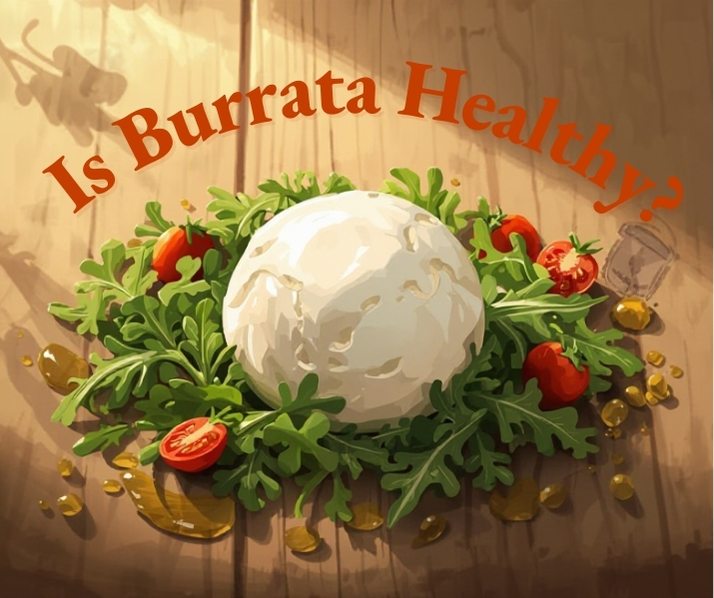
If you’ve fallen in love with burrata, I get it. That creamy centre, the soft outer layer, a drizzle of olive oil and some juicy tomatoes on the side… it’s the kind of cheese that turns a simple plate into something you’d happily order in a restaurant.
But at some point, usually mid–mouthful, the thought hits: “This tastes amazing… but is burrata actually healthy?”
Burrata is technically a type of mozzarella, but it’s made with added cream, which is what gives it that dreamy texture – and yes, it also makes it higher in fat and calories. That doesn’t automatically put it into the “forbidden” category, though.
So let’s look at burrata’s nutritional value, how many calories you’re really getting in a typical portion, whether it’s likely to be fattening for you, and how to fit it into a healthy diet without giving it up completely.
Quick answer: Is burrata healthy?
Burrata can fit into a healthy diet in small portions because it provides protein and calcium, but it’s also high in calories, saturated fat and salt. It isn’t a health food and can be fattening if you eat a lot, but an occasional small serving is fine for most people.
Burrata nutritional value: what’s inside?
Let’s start with what most people care about first: the calories.
How many calories are in burrata?
Most burrata cheeses sit in the 240–260 calories per 100g range, so they’re definitely on the richer side. For example, BelGioioso burrata has 70 calories in a 1 oz (28g) serving, which works out at about 250 calories per 100g.
Waitrose No.1 Italian Burrata (UK) lists 253 calories per 100g, with 76 calories in a 30g serving.
In practical terms, a small 28–30g portion (around an ounce, just a few forkfuls) gives you roughly 70–80 calories from the cheese alone.
Portion size is where things really start to add up. Burrata balls aren’t all the same size – some brands sell smaller “bambini” balls, others sell larger ones – but many standard supermarket balls are around 100g drained, and restaurant portions are often 125–150g once they’re on the plate. That means:
- A 100g portion is roughly 250 calories just from the burrata.
- A 125–150g ball can easily reach 300–380 calories, before you add bread, olive oil, cured meats or anything else.
So if you’re eating about half a medium ball (say 70–80g), you’re already in the 180–200 calorie range. That’s perfectly manageable in a balanced meal, but it’s good to know if you’re watching your overall calorie intake.
Here’s a quick comparison to show how similar different brands are:
| Example burrata | Where it’s sold | Calories (per 100g) |
|---|---|---|
| BelGioioso Burrata | US | ~250 kcal |
| Waitrose No.1 Italian Burrata | UK | 253 kcal |
| Galbani Italian Burrata | UK / EU | 256 kcal |
| Waitrose No.1 Burrata Bambini | UK | 243 kcal |
Is burrata a good source of protein?
Burrata does give you some protein, but it’s not exactly a protein powerhouse. Most burrata cheeses provide around 8–11g of protein per 100g, so a small 30g portion (just a few forkfuls) gives you roughly 2–3g of protein.
If you eat about half a 100g ball, you’re looking at roughly 5–6g of protein, and a full ball might give you up to 8–11g, depending on the brand. So per 100g you could call that a moderate amount of protein, but most of the calories in burrata are coming from fat, not protein.
That means it’s fine as a little protein “bonus” on top of a meal, but if you’re specifically trying to increase your protein intake, you’ll get a lot more value from foods like Greek yoghurt, cottage cheese, eggs, lentils or lean meat, which offer much more protein for fewer calories and less fat.
How much fat and saturated fat is in burrata?
This is where burrata really shows its indulgent side. Most burrata cheeses contain roughly 21–24g of fat per 100g, and around 14–16g of that is saturated fat.
If you have about 30g of burrata (a small taste), you’re looking at roughly 4–5g of saturated fat. Public health guidelines in many countries suggest keeping saturated fat to around 20g a day for women and 30g a day for men, so that little portion already gives you roughly 20–25% of a woman’s daily limit and about 15% of a man’s.
Eat around half a 100g ball and you’re closer to 7–8g of saturated fat, which is roughly a third of the daily limit for men and around 40% for women.
Finish a whole 100g ball on your own and you could be getting 14–16g of saturated fat in one go – that’s around 70–80% of a woman’s recommended maximum and about half of a man’s, before you’ve even counted any other sources like butter, meat, chocolate or pastries.
Carbs and sugar – anything to worry about?
If you’re worried about burrata being loaded with carbs or sugar, that’s one thing you can relax about. Burrata is a fresh cheese, so it’s naturally very low in carbs and doesn’t contain added sugar. Most of the time you’re looking at only a couple of grams of carbs per 100g, which is tiny compared to what you’d get from bread, pasta or dessert.
Those small carbs mainly come from lactose, the natural milk sugar found in dairy, not from spoonfuls of added sugar. So burrata isn’t a sugar bomb at all – the real “issue” with burrata is its high fat and calorie content, not the carbs.
Salt and sodium – how salty is burrata?
Like most cheeses, burrata does contain salt, and the sodium can add up if you’re eating big portions or having other salty foods the same day. Per 100g, many burrata cheeses sit in the moderate to high sodium range for a single food, so a small taste won’t blow your salt intake, but polishing off a whole ball on top of a salty diet might.
If you’ve been told to watch your blood pressure or cut down on salt, it’s worth seeing burrata as one of those foods you enjoy in small amounts, and balancing it with lower-sodium choices for the rest of the day. Pairing it with plenty of fresh vegetables, and going lighter on cured meats and salty snacks, can help keep your overall sodium intake more manageable.
Does burrata offer any health benefits?
Burrata isn’t a superfood, but it’s not all “bad news” either. Like other cheeses, it brings a few useful nutrients with it – they just come in a rich, high-calorie package.
Here’s where it can actually help a bit:
- It provides some protein and keeps you fuller for longer
Burrata has a moderate amount of protein per 100g, so it does contribute to muscle maintenance and can help your meal feel a bit more satisfying. It won’t beat Greek yoghurt or cottage cheese on the protein front, but it’s not just “empty” cream. - It’s a source of calcium for bones and teeth
Cheese is one of the main calcium sources in many people’s diets, and burrata is no exception. A reasonable portion can give you a noticeable chunk of your daily calcium needs, which helps support bone and tooth health. - You also get useful micronutrients from dairy
Alongside protein and calcium, burrata (like other cheeses) contains nutrients such as phosphorus, vitamin A and vitamin B12, which play roles in things like bone health, immune function and energy production.
On a more practical level, a little burrata can make a big salad or tray of roasted veg feel more enjoyable and “worth it”, which may help you stick to a more plant-rich way of eating.
But it’s worth repeating: all of these benefits come wrapped up in a food that’s high in calories and saturated fat, so they only really work in your favour when burrata is an occasional extra, not a daily habit.
Is burrata going to make me gain weight?
People often ask, “Is burrata fattening?” It can be, because it’s high in calories and fat – it all comes down to how much you eat and how often.
A small portion (around 30g) is about 70–80 calories, but most people easily eat more than that. Add in bread, olive oil and maybe some cured meats, and the calories from that “simple” burrata dish climb very quickly. Having bigger portions of burrata on a regular basis, on top of other higher-calorie foods you eat in a day, can definitely make weight gain more likely over time.
How to enjoy burrata in a healthier way
If you don’t want to give up burrata completely, the goal is to keep it as a small extra, not the main star of your plate.
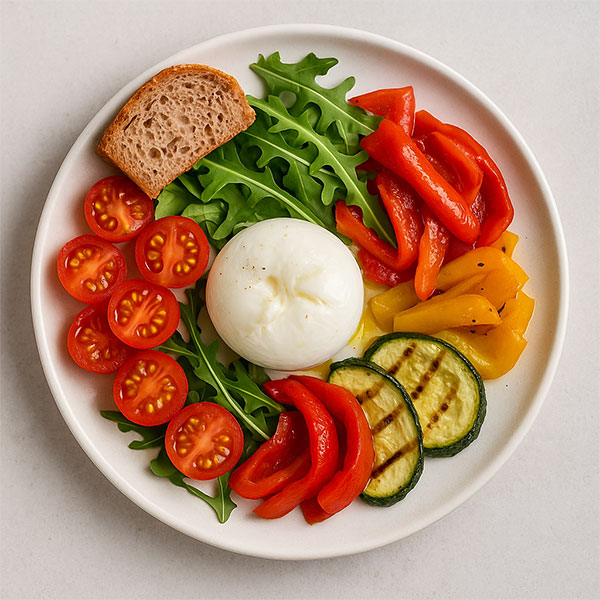
One easy way to do that is to build your meal around vegetables first. Think big plates of tomatoes, rocket (arugula), grilled courgettes (zucchini), roasted peppers or other colourful veg, and then add a small amount of burrata on top for creaminess, rather than centring the whole dish around the cheese.
Try to:
- Use a smaller portion, roughly 30–40g, instead of eating the whole ball yourself.
- Pair it with lots of veg and some lean protein (like grilled chicken, beans or lentils) instead of big piles of white bread and cured meats.
- If you’re adding olive oil, keep it to a light drizzle rather than soaking the plate.
- When you do want bread, go for wholegrain or sourdough and keep the portion modest.
That way, burrata becomes one rich, enjoyable element in an otherwise light, balanced meal, rather than the reason your calories (and saturated fat) suddenly jump for the day.
Burrata FAQs
Is burrata bad for cholesterol or heart health?
Burrata is high in saturated fat and also contains cholesterol, so eating large amounts regularly isn’t ideal if you’re trying to look after your heart or lower your LDL (“bad”) cholesterol. A small portion every now and then is usually fine for most people, but if you’ve been advised to cut down on saturated fat or cholesterol, keep burrata as an occasional treat and stick to modest portions.
Is burrata okay for diabetics?
Yes, burrata can be okay for diabetics in small portions, because it’s low in carbs and doesn’t contain added sugar. The main thing to watch is the calories and saturated fat, so it’s best kept as an occasional treat and not something you eat in large amounts or very often.
Is burrata healthier than mozzarella?
In most cases, mozzarella is the lighter, more everyday option, especially if you choose part-skim mozzarella. It usually has fewer calories and less saturated fat per 100g than burrata, while still giving you protein and calcium.
Burrata is richer and creamier because of the added cream, so it’s better to think of it as an indulgent cheese for special meals, and mozzarella as the more sensible choice for regular salads, pizzas and pasta dishes.
So, should you keep burrata in your diet?
If you enjoy burrata, you don’t have to cut it out – just treat it more like a special occasion cheese than an everyday staple.
Check the label so you know roughly how many calories and how much saturated fat you’re getting, keep your portion closer to a couple of forkfuls than a whole ball, and surround it with plenty of veg and lighter foods.
If you’d like a similar flavour with less impact on your daily saturated fat, use burrata now and then and lean on mozzarella or other lighter cheeses the rest of the time.

- Can Coconut Oil Help Varicose Veins? Here’s What It Can (and Can’t) Do - December 28, 2025
- Is Burrata Healthy or Fattening? Calories & Nutrition - November 25, 2025
- Plantain Chips vs Banana Chips: What’s the Difference (and Which Is Healthier)? - October 26, 2025