
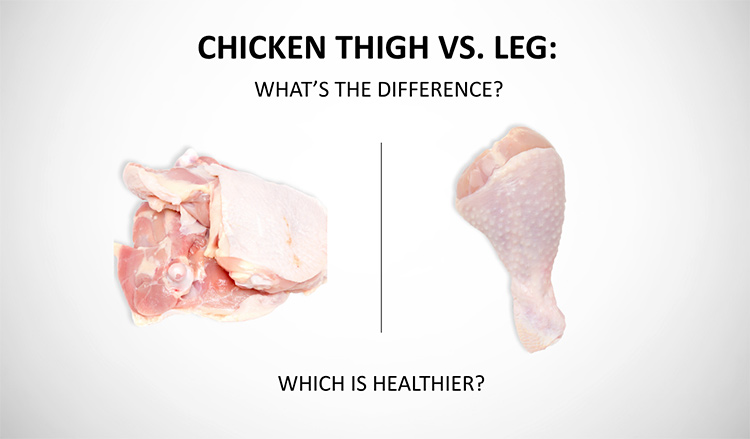
Chicken thighs, legs, drumsticks… it gets confusing fast. Are thighs and legs the same thing? Not quite, but they’re closely related.
Just to clear things up: when you see “chicken leg,” it usually refers to the whole leg quarter, which includes both the thigh and the drumstick. But in recipes or supermarket labels, people often use “leg” to mean just the drumstick (the lower part).
In this post, I’m comparing chicken thighs vs. drumsticks (aka “legs” in casual talk), since that’s what most people actually mean when asking which one’s healthier.
So let’s look at the nutrition side-by-side — calories, protein, fat — and figure out which cut makes more sense for your goals.
In summary:
Thighs have a bit more fat and calories and slightly more iron, while drumsticks are leaner, lower in calories, and offer more zinc. Both have about the same amount of protein, so the healthier choice really depends on your goals.
Chicken Thigh vs. Leg: Side-by-Side Nutrition Breakdown
If you’re comparing these two cuts, the differences are pretty small — but still worth knowing, especially if you’re tracking macros or trying to eat a bit leaner.
Here’s how 100 grams of raw, skinless chicken thigh compares to 100 grams of raw, skinless drumstick (aka chicken leg):
| Nutrient (per 100g) | Chicken Thigh | Chicken Leg (Drumstick) |
|---|---|---|
| Calories | 121 kcal | 116 kcal |
| Protein | 19.7 g | 19.4 g |
| Total Fat | 4.1 g | 3.7 g |
| Saturated Fat | 1.1 g | 0.9 g |
| Iron | 0.81 mg | 0.76 mg |
| Zinc | 1.6 mg | 2.1 mg |
Nutritional differences at a glance: What the numbers tell us
- Calories:
Thighs are only ≈ 5 kcal higher per 100 g (about a 4 % difference).
Typical 150 g raw, skinless portion: ~181 kcal for a thigh vs. ~174 kcal for a drumstick. - Protein:
Thighs contain slightly more protein, but the difference is minimal – 19.7g vs. 19.4g per 100g. Both are excellent sources of lean protein. - Fat:
Thighs have just 0.4 g more total fat per 100 g. - Iron & Zinc:
Thighs give you a touch more iron, while drumsticks edge ahead in zinc. Both minerals support energy, immunity, and overall health.
Overall: Skinless thighs and drumsticks are more alike than different. Thighs bring a bit more calories, fat, and iron; drumsticks are slightly leaner and supply more zinc. Pick the cut that best matches your taste and goals.
What if you leave the skin on?
Leaving the skin on adds a noticeable bump in calories and fat, while protein stays about the same.
Per 100g (raw):
- Skin-on thigh: ~221 kcal, 16.6 g fat
- Skin-on drumstick: ~161 kcal, 9.2 g fat (FDC 172373)
That’s roughly +100 kcal and +12 g fat for a thigh, and +45 kcal and +5.5 g fat for a drumstick versus their skinless versions. If you’re aiming to stay lean, peeling off the skin is the quickest way to slash calories and saturated fat without sacrificing protein.
So… which one is healthier?
Chicken drumsticks are slightly leaner, with fewer calories and less fat.
Chicken thighs are a touch higher in iron and offer a richer flavor.
Both are great sources of protein though, and either one can be a healthy choice depending on your goals.
Here’s a quick breakdown:
- For weight loss or low-fat diets: Legs (drumsticks) are leaner and slightly lower in calories and fat.
- For more nutrients and flavor: Thighs offer more iron and a richer taste, though they’re a bit higher in fat.
- For muscle-building or high-protein meals: Both provide around 19-20g of protein per 100g – the difference is minimal.
Bottom line: both cuts are healthy. Choose the one that fits your needs and how you plan to cook it.
Tips for a healthier chicken meal
Whichever cut you choose, a few small changes can make a big difference nutritionally:
- Remove the skin – It’s an easy way to reduce calories and saturated fat.
- Use healthier cooking methods – Roasting, grilling, air-frying, or baking are better than frying.
- Watch the portion size – A typical serving is 100–150g cooked meat (about one thigh or two drumsticks).
- Avoid heavily seasoned or pre-marinated packs – Some are loaded with added salt, sugar, or oil.
- Pair with veggies, not heavy sides – For a balanced meal, serve your chicken with greens, roasted veg, or whole grains instead of creamy sauces or fried sides.
FAQs
Do chicken thighs or drumsticks take longer to cook?
Thighs are a bit thicker and meatier, so they usually take slightly longer to cook than drumsticks — especially bone-in. Expect around 35–45 minutes in the oven at 190°C (375°F) for both, but drumsticks may finish a few minutes earlier. Always cook chicken to an internal temp of 75°C (165°F) for safety.
Which cut gives you more meat?
Bone-in thighs generally have more meat than drumsticks. A thigh has a higher meat-to-bone ratio, so you’ll get more edible portion per piece. If you’re buying boneless, both cuts offer a similar amount of meat per 100g.
Is chicken skin really that bad for you?
Not necessarily — it depends on your diet. Skin adds calories and saturated fat, but it also adds flavor. If you’re trying to reduce fat or manage cholesterol, removing the skin is a simple way to make your meal leaner. Otherwise, it’s fine in moderation.
Are pre-seasoned or “enhanced” chicken legs bad for you?
Many store-bought chicken legs are injected with salty solutions or marinades to boost flavor and moisture. This can increase sodium levels significantly. Always check the label — if it says “contains up to 15% solution,” it’s best to skip it if you’re watching salt or eating clean.
Can you use thighs and legs interchangeably in recipes?
Most of the time, yes — especially if the recipe calls for bone-in, skin-on dark meat. Just adjust the cooking time slightly if needed (thighs may take a little longer).
Final thoughts before you hit the kitchen
Whether you prefer the juiciness of a thigh or the simplicity of a drumstick, both cuts have their place on the plate. The real game-changer isn’t just which one you choose – it’s how you prepare it. What you add (or don’t add) matters far more than the tiny differences between the two.
So next time you’re standing in the meat aisle debating between thighs or legs, don’t stress. Pick what works for your recipe, your goals, and what you’ll actually enjoy eating – because healthy eating isn’t just about numbers, it’s about building meals you’ll stick with.
References
- USDA FoodData Central – Chicken, broilers or fryers, thigh, meat only, raw (boneless, skinless)
https://fdc.nal.usda.gov/fdc-app.html#/food-details/173627 - USDA FoodData Central – Chicken, broilers or fryers, drumstick, meat only, raw (skinless)
https://fdc.nal.usda.gov/fdc-app.html#/food-details/173614 - USDA FoodData Central – Chicken, broilers or fryers, thigh, meat and skin, raw
https://fdc.nal.usda.gov/fdc-app.html#/food-details/172385 - USDA FoodData Central – Chicken, broilers or fryers, drumstick, meat and skin, raw
https://fdc.nal.usda.gov/fdc-app.html#/food-details/172373 - USDA Food Safety & Inspection Service – Safe Minimum Internal Temperature Chart
https://www.fsis.usda.gov/food-safety/safe-food-handling-and-preparation/food-safety-basics/safe-temperature-chart

- Can Coconut Oil Help Varicose Veins? Here’s What It Can (and Can’t) Do - December 28, 2025
- Is Burrata Healthy or Fattening? Calories & Nutrition - November 25, 2025
- Plantain Chips vs Banana Chips: What’s the Difference (and Which Is Healthier)? - October 26, 2025